
Here's something I've learned from years on both sides of the stage: your speakers can sell more tickets than almost anything else you do. When a speaker posts "I'm talking about X in Dublin next month, come and say hi", it lands with people who already follow them for exactly that topic. In my experience that's worth more than most of the paid ads I've ever run.
In Part 1 I talked about winning great speakers with a clear brief. This time it's about what happens after they say yes. How do you get them shouting about your event without becoming the organiser who sends five reminder emails a week?
Speakers want a packed room as much as you do. Nobody fancies flying across Europe to talk to rows of empty chairs. What most of them don't have is time to make promo stuff. So make it ridiculously easy for them, make it worth their while, and actually listen to what they tell you.
The best ways to get conference speakers to promote your event are to agree it with them early, give them a ready-made promo pack and their own discount code, keep them involved through a speaker WhatsApp group, and answer their questions quickly.
When should you ask speakers to promote your event?
Bring up promotion in the speaker brief, right at the start. It's a much easier conversation when everyone knows what's coming.
When a speaker confirms, agree:
- What you need from them: headshot, short bio, talk title, a few bullet points, and the social handles they actually use.
- What they'll get from you: a promo pack, their own discount code, and a heads-up before you announce them.
- What you're asking for. Be specific here. "Could you post two or three times between the announcement and the event?" is clear and fair. "Please share!" gets forgotten.
- Who they can talk to. One named person for questions, so nobody's left guessing.
Then plan each speaker's announcement together. Tell them the day and time, send their assets a couple of days before, and post yours first so they can reshare it with their own spin. Tagging each other at the same moment will do far more than ten random shares spread over a month. An alternative to tagging is to invite your speakers to be co-authors or contributors on the posts you agree to schedule.
"Popular social media platforms like LinkedIn and Instagram allow you to have co-authors and contributors to a single post, which I've found extends your reach far beyond standard tagging and keeps the engagement within a single post that is visible on both, your event page and on the speaker's socials."
Yordan Dimitrov, Senior Search Manager, Reflect Digital
What should go in a speaker promo pack?
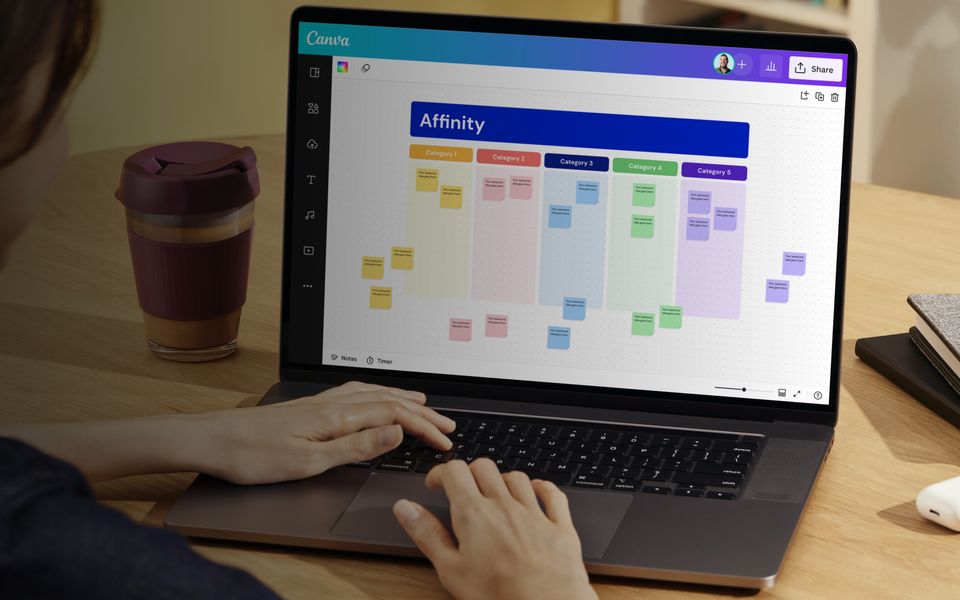
Honestly, if a speaker has to open Canva to promote your event, most of them won't bother. So build the templates once and create a personalised set for everyone, with their face, their talk title and your branding (sharing the Canva templates too isn't a bad thing, in case they want to tweak them).
Here's what I'd put in each pack:
- "I'm speaking at" card: 1200 × 627 (LinkedIn/X) and 1080 × 1080 (Instagram), for announcement day
- Talk spotlight card with title and session time: 1080 × 1350 (portrait feed), mid-campaign when the agenda is out
- Story/vertical version: 1080 × 1920, for Instagram/LinkedIn stories and the countdown
- "Use my code" card with their discount code: 1200 × 627, for ticket pushes and last-chance posts
- Email signature banner: 600 × 150, runs quietly for weeks
- Countdown card ("1 week to go"): 1080 × 1080, for the final week
A few things make a big difference here. Use a tool that can bulk-create from a spreadsheet (Canva and Figma both can), so thirty speakers takes a few hours rather than a week. Put the speaker front and centre rather than your logo, because people happily share photos of themselves and rarely share your ad. Keep the text big and short: name, talk, event, date, city. And send square and portrait versions so nobody has to crop anything.
"To help build trust and keep the promotion of your event human-first, use real photographs rather than AI-generated images of your speakers. More often than not, AI visuals don't actually match the real facial features of the person the images are based on. Unless you have explicit permission from the speaker to use an AI generated portrait image, I suggest you default to using their real headshot images and only using tools like Canva and Figma for the purpose of bulk-creating assets in different formats."
Yordan Dimitrov, Senior Search Manager, Reflect Digital
Write some suggested posts for them too. Two or three in different tones (one professional, one chatty, one quick one-liner) with your hashtag, handle and their tracked link already in. They'll rewrite bits, which is great. They're just starting from 80% instead of staring at a blank box.
Pop it all in one shared folder per speaker, something like "Promo pack - Gerry White", and send a single link. Much easier than digging through seven attachments.
Get on TikTok, YouTube and Instagram
LinkedIn and X are where most conference promo lives, but short videos on TikTok, YouTube Shorts and Instagram Reels are where loads of people discover things now. They're brilliant for reaching people who've never heard of you.
Ask speakers to film a quick 30 to 60 second teaser on their phone, something like "here's one thing I'll show you in my talk". It doesn't need to be polished. The slightly scrappy ones often do better.
Give them a vertical video template with branded intro and outro cards and a caption style, and leave the music off so they can add whatever audio is trending that week. Then post it as a collab on Instagram, or tag each other on TikTok, so the same video reaches your followers and theirs.
Don't forget last year's footage either. Chop talk recordings into 30-second clips, tag the speaker, and you've got free promo for this year's event. On the day itself, grab quick reactions, crowd shots and "best thing I learned today" clips. That's next year's marketing sorted.
Oh, and many people watch these on mute, so always add subtitles.
"Short videos recorded by our speakers have worked well for us too. We've shared them on Search 'n Stuff's own social channels and used them in our paid campaigns. A speaker explaining in their own words what they'll cover and what people will take away gives someone who's just discovered the event a concrete reason to look at the programme."
Yağmur Şimşek, Founder of Search 'n Stuff
Do speaker discount codes work?
Giving each speaker their own discount code is one of the easiest wins going. It gives them something nice to offer their followers ("here's 20% off" feels like a favour rather than a sales pitch), and it shows you whose audience actually buys tickets.
In my experience, bigger discounts work better, even if it means pricing the ticket slightly higher (think 50% off, or buy one get one free). Discounts that shrink over time also tend to beat ones that grow.
"For BelgradeSEO speaker codes were a great source of marketing, we had a lot of tickets come through attributed to our speakers."
Iva Jovanovic, Belgrade SEO
"Speaker discount codes haven't done much for us at Search 'n Stuff. What's consistently helped is speakers talking about their sessions in their own communities and close networks. We've seen a good amount of traffic and ticket sales come through private WhatsApp groups, Slack communities and speakers' own newsletters. It can be as simple as someone saying, 'We've been talking about this a lot in here, and I'm running a workshop on it at Search 'n Stuff.' That feels natural because it's part of a conversation they're already having."
Yağmur Şimşek, Founder of Search 'n Stuff
Getting the basics right
Name each code after the speaker. GERRY20 is memorable and feels personal, whereas SPK-0417 just looks like admin. Some ticketing sites also let you create a link with the discount already applied, which is worth doing because some people click and some people type.
Add a cap and an end date so you can create a bit of urgency later on ("my code runs out Friday!"). Check sales per code every week too, and share the results with your speakers. You'll find most of them are quietly competitive.
Ask what their audience needs
The biggest mistake I see is giving every speaker the same 10% code. Your speakers know their followers far better than you do, so just ask them: "What would get your people to buy a ticket?" Then shape the offer around their answer.
Here's roughly how it tends to play out:
- In-house teams at larger companies: a team or group discount (e.g. 3+ tickets). Budget sits with a manager, so the hook is bringing colleagues.
- Freelancers and consultants: a bigger percentage off, or an early-bird extension. They're paying personally, so price matters most.
- Agency staff: multi-buy or bring-a-colleague. Agencies send several people and love a deal across the team.
- Juniors, students and career changers: a deep discount or a limited number of free tickets. Access is the barrier, not interest.
- Senior and executive audiences: value-add (a VIP dinner seat, workshop access) rather than money off. Exclusivity moves them more than a discount.
- International audiences: a discount plus clear travel and hotel info. The ticket is a small share of their total cost.
Keep tweaking
Treat codes as a bit of an experiment. Start everyone on a sensible default, check in after two or three weeks, and change what isn't working. If a code has zero uses, the speaker probably hasn't posted yet, so check that before you blame the offer. And when someone's code is flying, ask them what they did and pass the idea on to the others.
It's also worth thanking the speakers who sell well, with a free ticket for a friend, for instance.
"Don't leave your speaker promo codes and discounts to just a few weeks before the event. You'll likely need to invest in other forms of marketing like email, Meta and other brand exposure opportunities to really get the sales pumping alongside speaker promo. You're better off pricing your tickets slightly higher, giving out the promo codes earlier on and using those ticket sales to fund more of the marketing for the event. Leaving discounts to 1-2 weeks before the event doesn't give attendees enough time to make plans especially if they're travelling. This applies even more to brand new events that is trying to build a reputation - be generous and you'll build the community that will stay with you for future years."
Sophie Brannon, StudioHawk US
Keep the energy up
Speakers get much more involved when they feel part of something, and a stream of reminder emails won't get you there. Give them reasons to talk about your event that go beyond "please share our post".
Start by backing them. Share their stuff, comment on their posts, and reshare their announcement with a few genuine words. It's a small thing, but people notice.
Make content with them as well as about them. A ten-minute chat before the event, a short video teaser, a quote card or a guest blog post all work well, and anything they appear in is something they'll want to share.
My favourite trick is a speaker WhatsApp group. Set it up as soon as the first few confirm. Before long, people are swapping travel plans, cheering on each other's posts and promoting each other without being asked. Drop in the odd milestone, a behind-the-scenes photo or a "who's arriving early for dinner?" and it stays lively. Get it right and the group sticks around long after the event, becoming a little community of people who'll come back to speak, attend and recommend you.
Send updates now and then, but only when there's real news, like "we're 70% sold" or "you're on the main stage". Every couple of weeks is plenty.
Keep your asks small and specific. "Could you share this card on Tuesday when the agenda goes live?" gets done. "Please keep promoting!" doesn't.
And don't worry about the ones who just aren't into social media. Some speakers aren't, and that's fine. Maybe they'd mention it in their newsletter, tell their team, or bring a colleague along.
After the event, send everyone their photos and recording quickly, along with a "thanks for having me" card ready to post. Speakers are buzzing for a couple of days after being on stage, and those posts are the best advert you'll get for next year.
Reply quickly
Few things put a speaker off faster than a question sitting in your inbox for a week. Slow replies make people feel like an afterthought, and that's usually when they stop promoting you.
Aim to reply the same working day, and never leave anyone waiting more than 48 hours. Have one place for speaker questions (an email address or the WhatsApp group) and one person who checks it every day, so it never turns into "ask whoever's around".
A speaker FAQ saves loads of time. Cover travel, expenses, the AV setup, slide format, recording rights, dietary needs, guest tickets and how the discount codes work, and add to it whenever someone asks something new. Save a few reply templates for the regulars too ("how do expenses work?", "can I swap my slot?", "where's my promo pack?").
If you don't know the answer yet, say so straight away: "Good question, I'm checking with the venue and I'll get back to you by Thursday." That's miles better than silence. And if something's wrong in their promo, whether it's a broken code, a typo in their job title or an old photo, fix it that day. No one's going to share a post with their job title spelt wrong.
Let AI do the heavy lifting (and check its work)
A lot of this is the same job repeated for every speaker: packs, posts, codes, replies. AI tools like Claude can save you hours, as long as you set them up properly. A post with the wrong date or a mangled job title is worse than no post at all.
In Claude, a Skill is a saved set of instructions and examples that it follows every time. Make one for your speaker promo pack with your brand voice, event details, hashtags, image sizes and a checklist, and every speaker gets the same quality, whoever on the team runs it.
Give it one fact sheet with the dates, venue, prices, code rules and links, and tell it to stick to that. Most AI mistakes happen when it fills in the gaps by guessing.
Be specific in your prompts, too. Instead of "write a post for our speaker", try something like:
"Write three LinkedIn posts for Gerry White announcing his talk [title] at [event] on [date] in [city]. Make one professional, one casual and one a short one-liner. Include the code GERRY20 and this link. Keep each under 600 characters, use UK English, and only use the hashtag #TakeItOffline."
Then add: "Before you finish, check every name, date, price and code against the fact sheet and tell me anything you couldn't confirm."
It's handy for speaker questions as well. Load in your FAQ, let it draft the replies, and someone just checks and sends. You can also paste in your code data and ask which speakers, offers and posts are bringing in the sales.
Whatever you use it for, a real person signs it off. Nothing should go out with a speaker's name on it until they've seen it.
Your speaker promo checklist
When they confirm
- Collect headshot, bio, talk title, bullet points and social handles
- Agree what promotion you're asking for, and when
- Ask what kind of discount would work best for their audience
- Add them to the speaker group and share the FAQ
Before you announce them
- Create their personal code and tracked link
- Generate their promo pack (all sizes) plus suggested post copy
- Send the pack 48 hours ahead with the announcement date and time
Announcement to event day
- Post first, tag them, reshare their post
- Send a fortnightly update with news they can share
- Check code redemptions every two to three weeks and adjust offers
- Send a final-week countdown card and a "last chance" code nudge
After the event
- Send photos, recording and a "thanks for having me" card within a week
- Share code results and a genuine thank you
- Ask what would make promoting easier next time
TL;DR
Treat your speakers like partners rather than free billboards. Give them everything ready to post, an offer their audience will love, and replies faster than they expect. Do that, and they'll help you sell tickets this year and want to come back next year too. Community drives engagement, and good speakers often bring their community with them.