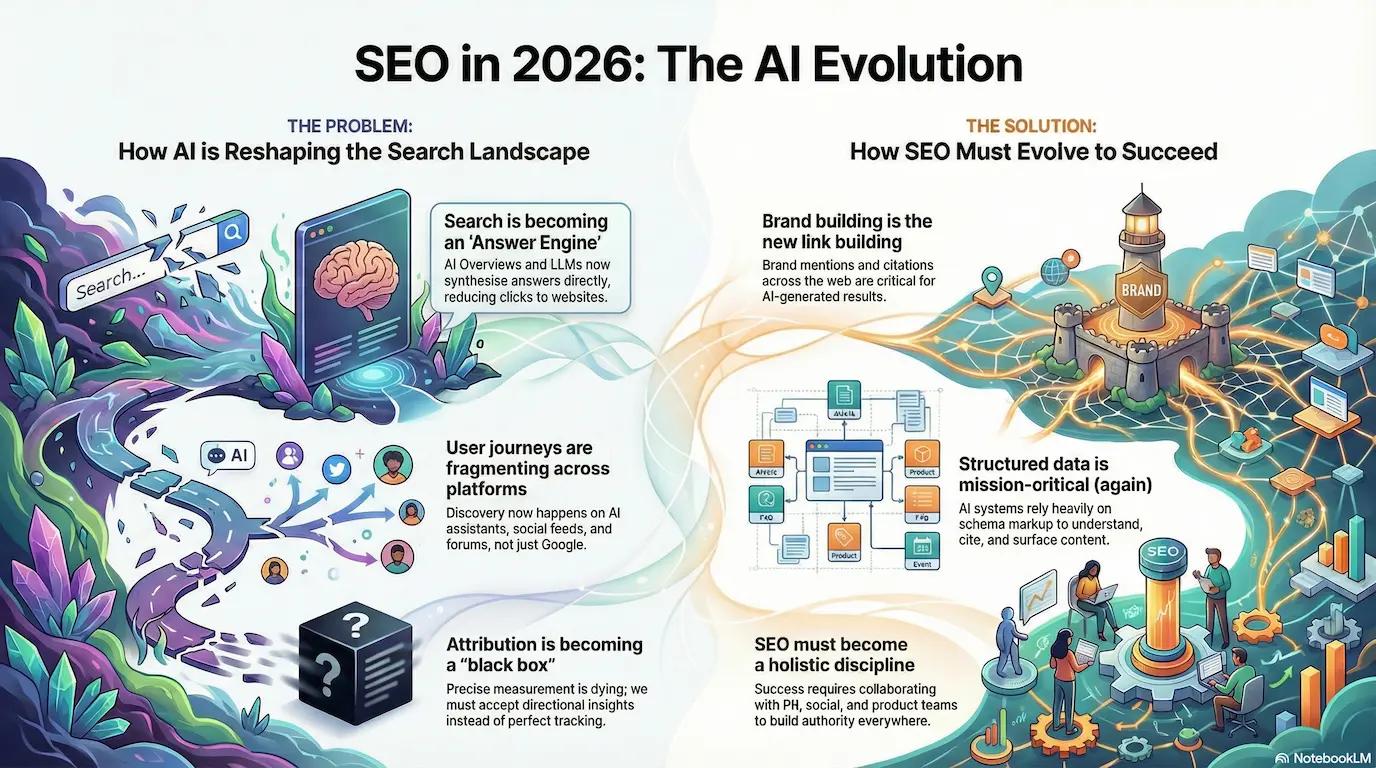

If 2025 was the year we all realised SEO was changing, 2026 will be the year we decide what to do about it. We are moving out of the 'AI hype' phase and into a reality where search is about generating answers, not just recommending links.
To help make sense of this new era, we asked some of the brightest minds in the industry from independent consultants to agency heads to share their vision for the next twelve months. Whether it’s the rise of AI agents, the evolution of 'GEO' back into just 'SEO', or the critical need for genuine human expertise, this roundup provides the strategic clarity needed to thrive in the 2026 search landscape.
- SEO Evolution: Traditional rankings fade as AI generates answers; focus on being cited across platforms (AI overviews, social, LLMs) for influence and conversions.
- Brand & Authority: Brands win through consistent mentions, expertise, and trust signals,replacing links as the top currency.
- Technical & Content Shifts: Prioritize structured data, entity optimization, human expertise, and full-stack skills; use AI for efficiency, not shortcuts.
- Challenges & Opportunities: Expect traffic declines, tool consolidation, and agentic search; adapt via experimentation, collaboration, and business-aligned metrics.
- Consensus: SEO isn't dying - it's expanding. Winners build durable foundations amid fragmentation.
The Who and topics
- Silvia Martin (Independent SEO Consultant, Trebole): AI enables experimentation and tool-building; traffic declines, so prioritize multi-platform visibility and brand authority. AI agents grow cautiously due to privacy risks.
- Anthony Barone (Co-founder, StudioHawk UK): SEO thrives by educating on long-term value over AI hype; websites remain key for brand equity and holistic visibility across platforms.
- Iva Jovanovic (SEO & Content Specialist): SEO integrates with marketing; reject AI shortcuts for trust-building content and technical foundations—GEO is just expanded SEO.
- Gerry White (SEO Consultant & GEO Specialist at Dergalt): GEO becomes "just SEO"; brand mentions > links, structured data revives, technical SEO critical amid attribution challenges.
- Aleyda (SEO Consultant, SEOFOMO): Search hybridizes with AI for transactions; durable wins from technical clarity, brand authority, and business alignment,hoping for AI visibility tools.
- Bengü Sarıca Dinçer (SEO Manager, Designmodo): Google dominates, but AI boosts brand signals; align SEO with storytelling for recognition, use AI for research only.
- Jonathan Moore (Technical SEO Consultant): Answers replace links, eroding traffic; optimize for personalized AI surfaces, agentic browsers, and multi-format content.
- Vanda Pókecz (SEO Product Lead, Atolls): SEOs gain AI-powered independence but need cross-team collaboration; focus on storytelling and strategic navigation over hype.
- Emina Demiri-Watson (Head of Digital Marketing, Vixen Digital): Post-AI hype, emphasize full-stack skills and outcome KPIs; use LLMs practically for insights, not unstable rankings.
- Will Kennard (SEO & Web Consultant): Technical SEO surges to fix AI errors; AI for factual content parity, humans for unique differentiation.
- Natalia Witczyk (International SEO Consultant, Mosquita Digital): Tool monopolies rise; Google/Gemini dominates unchallenged post-antitrust failure.
- Tom Bourlet (Head of Marketing, Modern World Business Solutions): Ad costs soar; AI agents enable direct purchases, shifting e-commerce - test and diversify.
- Yagmur Simsek (Independent SEO Consultant, Search ‘n Stuff): SEO earns "discipline" in answer-first search; GEO is proper SEO—build topical authority, brand identity, and community signals for AI trust.
- Yordan Dimitrov (SEO Manager, Reflect Digital): Embrace rapid changes like content licensing and accessibility for AI agents; brand CTRs rise, algorithms fight AI slop—focus on multi-platform presence and adaptability.
- Sophie Brannon (Co-Founder & Director StudioHawk USA): hype hits a ceiling as practical utility takes over; SEO integrates deeply into the full marketing funnel. Prioritize multi-platform brand authority over "AI slop" and translate technical performance into boardroom-ready business value.
Silvia Martin
Independent SEO Consultant and founder of Trebole
When I think about 2026, I see AI as a real opportunity for digital marketing, SEO and online visibility, not something to fear.
The barrier to entry is lower than ever, which means more marketers and businesses are using AI to experiment, build small internal tools, test content formats, and even “vibe code” their own workflows, apps, and tools instead of relying solely on off-the-shelf platforms. Not every experiment will work, but experimentation is no longer optional; it’s how you learn faster and stay competitive.
Search behaviour is also changing, and the decline in clicks and traditional organic traffic we’re already seeing is here to stay, driven by AI Overviews, zero-click results, and LLMs answering queries directly. In this context, SEO is no longer just about rankings and traffic, but about visibility and influence across AI systems and different platforms. However, I believe Google will still retain the largest share of the search market over the next year.
AI agents will continue to grow in the coming year, with more integrations, better tooling, and wider adoption across marketing, operations, and product teams. More people will start using agents to automate tasks, connect systems, and support decision-making, especially as platforms make them easier to deploy and manage. However, security and data privacy remain major concerns. Because of these risks, I think that full adoption will be cautious rather than explosive in 2026.
I believe brands will matter more than ever, both personal brands and company brands. Being consistently visible, cited, and mentioned across trusted sources will shape success as AI plays a bigger role in how people discover, evaluate, and choose, making branding and authority critical assets for 2026 and beyond.
Anthony Barone
SEO will only thrive more, not die, the hard part is dispelling the AI noise, and providing education to brands/c-suite.
I believe that SEO never really died, it’s never been as popular as say, branding and socials, but it’s light dimmed a bit as AI AI AI came to wash over every LinkedIn post, Forbes article, tech bro trying to sell a course or stoke fear to buy said tool.
We have a situation where shiny toy marketers with KPIs to hit in a terrible economy (UK) and Americanised C-suite boomers with zero clue as to how marketing works, wanting to not feel fomo and also wanting instant results jumping on the AI bandwagon and not understanding SEO or not wanting to waste time with a ‘long-term channel’ as ‘everyone uses CGPT’.
The issues are that this causes a distraction for the company, the brand, the team, and internal resource gets pulled left and right, depending on what the founders/c-suite read that morning.
They fail to remember what are the goals are, what is the company is trying to achieve and how SEO or any marketing channel and the tasks required by each channel will help to grow the business.
Making the marketers internally go along with it to keep their jobs, placate the higher-ups and then try to figure out how it all works while letting competitors build equity online, while these people throw budgets, time and resources at AI.
As we’ve had Chat GPT for a few years now and new tools come along from Google and other companies like Claude, etc., it still shows us that while things are changing and the way people search are changing a bit from the Google-dominated quarter century, we are still seeing people are ‘SEARCHING’, no matter the platform.
And what are these platforms looking at to serve you to it’s users?
Your brand, your website, your social media, your content, your authority, your qualifications, your brand reputation - and where is a lot of that information stored? A lot is on your own website.
Therefore, your website is still a key factor for your marketing, it’s still a channel you can control, build, grow and dominate competitors with.
SEO isn’t dying, it’s evolving, these in-house people in most marketing and finance departments and the C-suite will come to realise it soon enough when the numbers aren’t as strong as they wanted (thinking AI is this silver bullet that will propel them to Coca-Cola-like worldwide domination) and then look to catchup[ and grab some of that lost time and equity on online channels.
What should you do?
Search / SEO is now a holistic game, not just 100% Google. It’s more platforms to be visible on and optimise for, and a lot of it still starts with your website and optimising it for users, promoting your brand, showcasing your expertise and remember why would someone buy from you, what makes you special and what marketing channels and related tasks need to be done to achieve the goals, build the brand and grow the business.
Iva Jovanovic
SEO & Content Specialist + Conference Organizer
Search is no longer just links and rankings. It is answers, summaries, feeds, and recommendations shaped by AI systems long before a user ever reaches a website. With that in mind, I believe SEO in 2026 will look less like a checklist and more like a system that connects different aspects: technical foundations, content intent, and real business outcomes. And more than that. SEO will connect with other branches of digital marketing, forcing SEOs to explore, learn, and experiment even more.
The biggest challenge will not be “AI replacing SEO,” but businesses misreading where value is created and overinvesting in unstable shortcuts while neglecting durable brand and technical foundations.
Contrary to the leading narrative of SEO being dead and GEO being the new thing, it’s not. GEO is SEO, and the only difference we have in 2025 and will continue in 2026 is having another medium/channel where results will be displayed. And this doesn’t mean we shouldn’t monitor LLM activity or focus solely on LLM answers. It means including the new medium in our strategies, but ultimately focusing on delivering good websites with good content and a good technical foundation.
SEOs should be doing more work that strengthens trust, authority, and clarity at a system level. That means building websites that clearly represent who you are, what you do, and why you are credible.
What SEOs should be doing less is chasing shortcuts, overproducing generic AI content, and obsessing over single keywords in isolation. Tactics designed to game temporary features, exploit brief algorithm gaps, or “optimize for AI” without understanding stability usually collapse as soon as interfaces or weighting change.
There also needs to be less mass production of generic AI content. Scaling pages that rephrase what already exists adds noise, not value. Content that lacks perspective, authorship, and proof of expertise is increasingly filtered out, whether by algorithms or by users.
What we ultimately need is more learning, experimenting, and diving into other marketing fields. We need to explore the backstage, see how things get developed, and broaden our knowledge and skills. Collaboration has never been needed more, with other departments, other SEOs, other areas.
Gerry White

SEO Consultant at Dergal, Nerd and GEO Specialist
2025 was probably the year we collectively went, "Oh crikey, SEO is changing." just with more colourful language and I'll start with a rant: the 'contract' between content producers and Google is truly smashed. No longer do we produce great content, get listed in the ten blue links, and get rewarded with traffic. Google is pushing harder into AI overviews and pushing people into AI Mode, users are increasingly bypassing search engines entirely for ChatGPT, Grok, Perplexity, and others. Meta and TikTok can’t be ruled out, Reddit as well has just introduced an answer engine.
This means we need to evolve, re-skill, and fundamentally rethink what this new world means for us, but this isn't a different discipline, it's just a wider umbrella.
Lately, I've seen a lot of chatter suggesting that Generative Engine Optimization (GEO) and LLM optimization are entirely different beasts, something "traditional" SEOs aren't equipped to handle. Historically, our industry has always evolved by absorbing specialized subsets. International SEO brought us hreflang and localization. Local SEO introduced proximity signals and entity optimization. ASO taught us app store dynamics. Google Merchant Center forced us to master feed management. None of these are ‘just’ SEO, yet they all live under the same umbrella because the core principles—authority, relevance, data-driven analysis, and technical excellence—remain constant.
The "old school" SEOs I know haven't been sitting on the sidelines. Since the day ChatGPT went live, they've been reverse-engineering LLM citations, building analysis tools, and studying how these engines consume and surface data. GEO isn't a replacement for SEO; it's a specialist subset of it, just like all the others before it.
Understanding the New Landscape
The key is understanding exactly how these new results are built and presented, and more importantly, how to populate them. Results are increasingly assembled from disparate data sources, structured data, content snippets, citations, entity relationships, that feed into what users actually see, whether that's an AI overview, a ChatGPT response, or a knowledge panel.
This is also challenging because the data available to us is being rapidly reduced. More and more, we're going to have to accept not knowing our precise visibility, our 'rankings,' and watching attribution slip away into the black box. SEO needs to be broader now. Don't focus exclusively on the classic blue links. Start looking at the broader customer journey as it spans multiple platforms—social, AI assistants, forums, review sites. Measurement will be increasingly challenging, and we need to accept that understanding a journey can span multiple browsers, devices, and platforms where we simply won't have the data we once took for granted.
What Happened in 2025:
- The GEO ‘Panic’: Everyone suddenly discovered that optimizing for LLMs was a thing, and immediately declared it a separate discipline (spoiler: it isn't)
- The Death of Zero-Click Certainty: Google's AI Overviews went from experimental to ubiquitous, decimating click-through rates for informational queries
- The Continued Rise of Multi-Modal Search: Voice, image, and video search became genuinely important, not just something we paid lip service to
- Platform Fragmentation Accelerated: Users discovered they could get answers faster from Claude, ChatGPT, or even TikTok than wading through SEO-optimized listicles
Predictions for 2026:
1. We'll Stop Calling It GEO and Just Call It SEO By mid-2026, the industry will quietly drop the "GEO vs SEO" debate and accept that optimising for LLMs, AI overviews, and traditional search is all just... SEO. Just like we don't call it "voice SEO" or "featured snippet SEO" anymore, it's all part of the job and hopefully we will settle on a single acronym rather than the 50+ that don’t work.
2. Brand Building Becomes the New Link Building Brand mentions, citations in AI training data, and presence across platforms will matter more than traditional backlinks ever did. If your brand isn't being talked about on Reddit, industry discussions, and relevant publications, won't perform in AI-generated results.
3. Structured Data Becomes Mission-Critical (Again) Remember when we all got excited about schema markup, Well, it's back with a vengeance. LLMs and AI systems rely heavily on structured data to understand and cite content. Expect schema.org to become more important than it's been in a decade.
4. Traditional Keyword Research will Change AI systems understand intent and context better than ‘keywords’. We'll shift to topic authority mapping, entity-based optimisation, and understanding semantic relationships instead.
5. Technical SEO Gets Critical With Google and other platforms scraping content to train AI and populate overviews, we'll need new strategies around structured data, content licensing, and potentially even AI-specific protocols. We will be opening up content that previously we might have hidden, content needs to perform better without JavaScript and internal linking needs to be even cleaner.
6. Attribution Will Become Directional at Best Accept it now: multi-touch attribution across platforms, browsers, and AI assistants won't be solved in 2026. We'll move toward modeled attribution and directional insights rather than pretending we can track everything accurately. The sooner we accept this, the sooner we can focus on meaningful proxy metrics.
7. Content Quality Will Mean Actual Expertise The days of hiring cheap writers to churn out 2,000-word articles optimized for keywords are over. In 2026, content will need to be genuinely valuable, demonstrably expert, and ideally authored by real humans with actual credentials and experience, however using AI to ‘optimise’ the content flow will be the norm. Low quality AI-generated slop will be filtered out systematically by both Google and LLMs.
What Should We Actually Do?
The same things we've always done, but evolved:
- Build genuine authority: Not just backlinks, but real expertise, real mentions, real influence in your space
- Master structured data: Schema, entities, and machine-readable content are back on the menu
- Diversify traffic sources: Don't rely on Google alone—build presence across platforms where your audience actually spends time
- Invest in brand: Get mentioned, get cited, get known. Become the source that LLMs and search engines reference
- Get comfortable with uncertainty: Precise metrics are dying, directional insights are the new normal
- Think cross-platform: SEO doesn't stop at Google anymore, and honestly, it probably never should have
If you've been doing SEO properly for the last decade, building authority, creating valuable content, mastering technical implementation, and adapting to each platform's unique requirements, this shift won’t kill, but clicks will be dropping for everyone, impressions and clicks will only be half the metrics.
2026 will separate those who adapt from those who keep optimizing for a world that no longer exists. The SEO skillset got wider, keep learning.
Aleyda Solis
SEO Consultant, Creator of SEOFOMO & Crawling Mondays
- Traditional search will become a hybrid layer rather than a pure traffic channel: It might play a narrower, but more critical role through the purchasing journey. Success won’t come from rankings alone. It will come from earning trust and becoming the consistently cited and remembered entity across search, AI-driven surfaces, and adjacent channels. SEO will be about cross-channel findability, tied to business outcomes, supported by improved measurement frameworks that can justify continued investment beyond traffic, that is not the best metric to assess success anymore.
- AI search will move beyond pure “answer engines” and into action and monetization layers, in particular for ecommerce: far more integrated, transactional, and personalized; while also being pushed to significantly improve trust, grounding, and measurement.
- That’s why the fundamentals that genuinely compound, such as technical clarity, brand authority and establishing expertise across the full customer journey, optimizing for differentiated value recognition, and strong internal stakeholder alignment, are the most durable advantages for SEO teams going into next year.
- We will (hopefully) get a search console to monitor and assess visibility and performance in AI search platforms.
More from Aleyda and others on Search trends here on SEOFOMO
Bengü Sarıca Dinçer
SEO Manager at Designmodo
As we move into 2026, I don’t think Google stops being the main search interface. That said, search is still anchored in Google for most users, yet it’s increasingly influenced by AI assistants, social platforms, and online communities that shape what people trust and what they search for in the first place.
In 2026, we're going to see more AI-powered results, summaries, and conversational layers and they will continue to change how information is consumed. Users are getting answers faster, often without clicking, and they’re moving between platforms more fluidly. As a result, being visible now requires being recognizable when your brand or expertise appears in an AI overview, a social recommendation, or a cited source.
One of the biggest challenges in 2026 will be the growing gap between performance and perception. Traditional SEO metrics still matter, but they won’t fully reflect business impact. Brands that are consistently mentioned, searched for by name, and recognised across multiple platforms will outperform those that rely solely on non-branded discovery. So I anticipate that brand recognition is quietly becoming one of the strongest SEO advantages.
I also expect trust to become more consolidated. Signals like entity clarity, topical consistency, real authorship, and off-site validation are becoming harder to fake. Sites that look interchangeable, even if technically sound, will struggle to stand out in environments designed to reduce redundancy.
In response, I think SEO people should be doing more work that strengthens brand presence across platforms. That means aligning SEO with social, PR, community, and product storytelling and understanding how content travels, gets referenced, and reinforces brand memory. Structuring content clearly, connecting it through internal and external signals, and investing in recognisable voices will matter more than publishing at scale.
At the same time, SEOs should be doing less keyword-first planning in isolation. Keyword demand still has value, for sure, but without brand relevance and contextual authority, it’s increasingly fragile. I also think we need to be more selective with AI-driven content production. AI works better as a research tool, not as a replacement for original thinking.
Overall, SEO in 2026 feels less like a race for rankings and more like a long-term exercise in recognition and trust. Google may still be the primary interface, but the brands that win will be the ones users already recognize, no matter where the discovery starts.
Jonathan Moore

Technical SEO and Analytics Consultant
As we move out of 2025, search is no longer primarily about recommending sources. It is about generating answers.
Search engines synthesise responses directly, rather than acting as gateways to websites. This shift is being accelerated by an ongoing arms race, with Google rapidly closing the gap and aiming to overtake OpenAI and other LLM providers. The result is sustained disruption across search, most visibly through AI Overviews sitting above traditional results. Authority-heavy core updates will continue to push visibility towards established brands. Combined, these changes hollow out organic traffic for most sites. The likely introduction of ads into AI surfaces represents a further erosion of traffic.
Alongside this acceleration, we should expect further instability driven by rushed adoption. The rapid deployment of LLM features and widespread vibe coding is already introducing security, data leakage, brand safety risks, and poorly synthesised outputs. Over the next year, trust will become a differentiator, not just visibility, as platforms are forced to address the consequences of moving faster than their underlying safeguards allow.
During the last 12 months we have seen dramatic changes to user behaviour. Decision-making now happens in the messy middle, where people consult multiple surfaces before deciding.
Discovery now occurs across AI answers, feeds, and social platforms, not just on search results pages. Journeys are increasingly non-linear and shaped by micro-moments rather than single queries.
Journeys increasingly start outside traditional search. Social feeds, AI answers, apps, and assistants often form the first touchpoint. AI systems aggregate evidence and form conclusions long before links to sources appear. Traditional results sit below AI summaries, citations, and extracted answers, rather than acting as the primary interface. Decisions are made across fragmented surfaces rather than on a single results page.
To remain visible, brands need to consider optimising multiple surfaces, rather than relying on Google. This includes AI Overviews within search, traditional results such as rankings and snippets, LLMs that reference or retrieve content directly, and other discovery platforms where journeys begin, including social, communities, and partners.
AI search results will also become more personal and contextual. What users see will increasingly differ based on their history, preferences, and situation. AI assistants are remembering prior interactions and tailoring responses accordingly. In 2026, search will feel less like a sequence of isolated queries and more like an ongoing conversation.
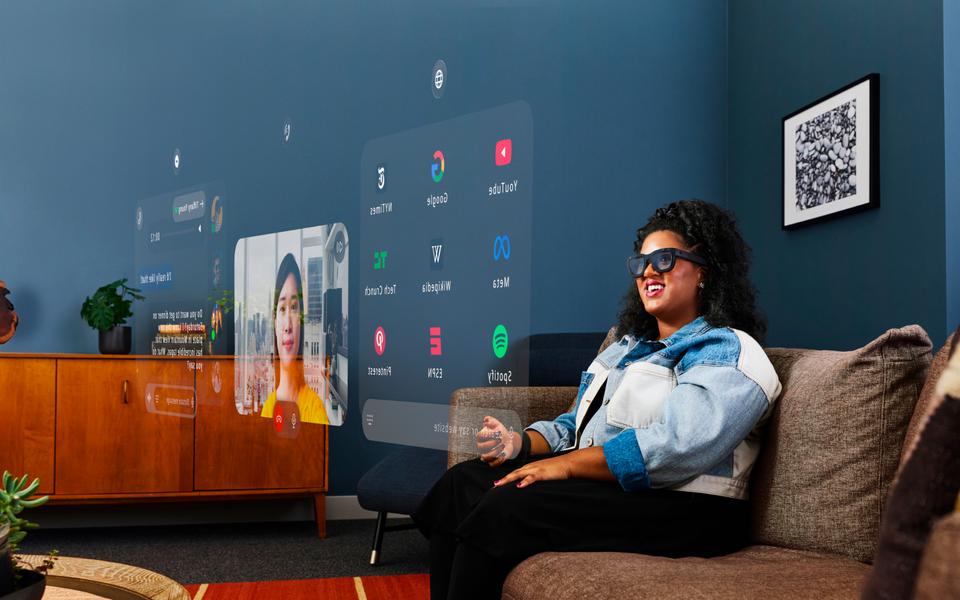
AI assistants will also move beyond providing answers to taking action on our behalf. Feeds will play an increasingly important role in facilitating product discovery, and hands-free interactions will become more common as voice, camera, and wearable devices are adopted. Tools such as Google Lens and Meta AI glasses point to a future where typing is no longer the default.
The web itself is on the verge of becoming agentic. Browsers are evolving into AI-powered tools that can read, click, and act like a human user. Protocols such as the Model Context Protocol and Agent-to-Agent communication will allow AI systems to share data and context. These standards will connect websites, apps, and agents into a shared network of actions.
To stay ahead of the curve, brands should continue to help users find what they want by being visible in the surfaces where they are active.
Collect first-party data wherever possible, because understanding your audience directly matters more than ever. Structure content so it can be easily extracted as evidence across AI and search surfaces. Double down on lower funnel content to cover the full intent spaces of synthetic sub-queries. Brands should strengthen their authority signals by demonstrating clear expertise, facts, and sourcing. Where appropriate, continue to create content in multiple formats, including short-form video, to match how different platforms surface and prioritise information.
Vanda Pókecz
SEO Product Lead at Atolls
My prediction for 2026 is that SEO will move into a paradoxical but powerful position: practitioners will become both more independent and more interdependent at the same time.
On the one hand, SEOs will gain unprecedented independence. With AI tools, low-code and no-code solutions, and vibe coding, they will no longer be limited by access to engineering or data teams for every idea. Instead, SEOs will increasingly build their own internal tools, set up monitoring and automation, visualise complex datasets, and prototype solutions themselves. This shift will not just speed up execution; it will also fundamentally change how ideas are pitched. Higher-quality mock-ups, dashboards, and MVPs will make SEO proposals clearer, more tangible, and easier for stakeholders to buy into.
At the same time, SEOs will need to become more interdependent, more actively connected, than ever before. This is driven not only by AI-powered search, but by the broader fragmentation of user behaviour. People no longer ‘just Google’. They discover information across AI answer engines, social platforms, marketplaces, and large e-commerce ecosystems. No single team owns this entire journey, which makes cross-functional collaboration essential.
SEOs are uniquely well positioned to act as connectors across disciplines, from Product and Engineering to Brand, Content, CRO, Social, and even Customer Support. Yet SEO has often been practised in relative isolation, fighting for prioritisation rather than embedding itself into shared initiatives. In 2026, that mindset will continue to shift. The most effective SEOs will actively seek overlap, build horizontal knowledge, and align their goals with those of other teams. Many successful projects already solve problems for multiple disciplines; recognising and leveraging that overlap will become a core SEO skill.
Finally, SEOs will learn to play the game better. That means resisting the instinct to either fight every change or jump head-first into every hype cycle. Instead, successful SEOs will focus on navigation: understanding trade-offs, communicating strategy clearly, and framing SEO work in formats that resonate with decision-makers. Strong storytelling, clearer strategy articulation, and better stakeholder communication will matter just as much as technical expertise.
2026 will reward SEOs who combine executional independence with deep collaboration, those who can build on their own, but win together.
Emina Demiri-Watson

Head of Digital Marketing at Vixen Digital
By the end of 2026, effective SEO teams will have moved on from AI hype. They will use LLMs where they genuinely add value and build full-stack marketing skills that demonstrate impact at a business level. For some, this will feel familiar. For others, it will mean relearning fundamentals that were temporarily sidelined.
We are past the peak of AI hype
SEO is now firmly in the AI disillusionment phase. The early excitement has faded and the limitations are clear.
Many tools claiming to measure “AI rankings”, citations, or LLM visibility are breaking down because what they attempt to measure is not stable, repeatable, or actionable. Teams that invested heavily in shiny tooling and automation are starting to see that much of this work delivers little real impact. As AI continues to underdeliver against inflated expectations.
Google is in the lead, but the product is unstable
Google has established itself as the dominant force in AI search, but its rollout remains inconsistent.
Features such as AI Mode in main search and agent-style experiences have been launched, revised, and in some cases withdrawn entirely. Security concerns, hallucinations, and trust issues continue to push Google into public experimentation followed by retreat.
Meanwhile, many SEO teams have scrambled to optimise for unstable features, only to realise that progress now requires a return to core marketing fundamentals.
The skills that will matter in 2026
The era of extreme specialisation is ending. The skills that matter are broader, not narrower.
A full-stack SEO mindset - SEO extends far beyond rankings. Strong teams start with real audience understanding, map brand presence across owned, earned, and paid channels, and ensure that pre-click messaging aligns with post-click experience. SEO influences the entire journey, from first exposure to conversion and retention.
Analytics literacy beyond SEO tools - Rankings are no longer a credible measure of success. In 2026, effective SEOs will define KPIs tied to commercial outcomes, communicate attribution limitations clearly, and focus on behavioural signals such as engagement depth, repeat visits, assisted conversions, and cross-channel movement. Reporting will demonstrate understanding, not activity.
Practical LLM literacy - LLMs cannot be reverse engineered, AI detection remains unreliable, and tracking “AI rankings” is fundamentally flawed. Value comes from using these systems appropriately for audience research, intent classification, content gap analysis, and pattern recognition at scale. The SEOs who succeed will understand both the strengths and limits of probabilistic systems and avoid treating them as deterministic tools.
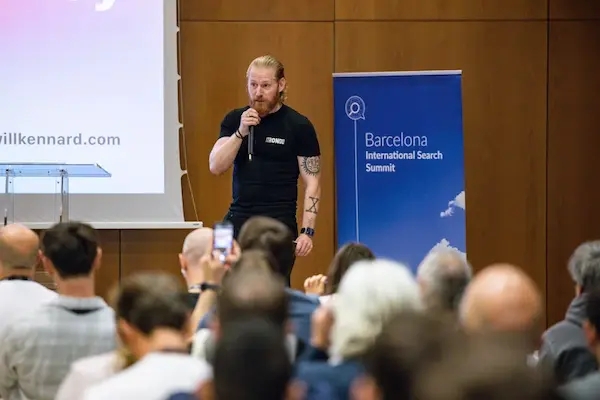
Will Kennard
SEO & Web Consultant
Technical
Tech is moving at an alarming rate, and I don't think people are talking enough about the increased importance technical SEO will have as more and more apps and websites go live filled with errors from AI coding tools.
A lot of the hype around SEO "dying" is mostly aimed at content because it's easy for anyone to create content with ChatGPT etc; quality aside anyone can ask ChatGPT to write an article. On the other hand, technical still requires a large base of context and experience to properly diagnose issues, and I believe this will only grow in importance whilst LLM token limits remain roughly the same despite many new models.
SEOs Need to Learn to Code
My previous point isn't implying that AI coding tools are inherently 'bad' - they are a huge time saver and can accelerate ideas quickly. This is an opportunity for SEOs to use these tools to gain a deeper understanding of development processes and technologies and build their own solutions to complex problems. In 2026 the best SEOs will be those who see AI not as a threat but as an opportunity to learn and grow.
Learning coding is now no longer negotiable. SEOs only need the basics, but it will improve your work tenfold. Build your own apps, build sites, break them, and solve problems: that's what technical has always been about, now it's just faster.
Natalia Witczyk

International SEO Consultant / CEO @ Mosquita Digital
2026 will be the year of monopolies. On one hand, many SEO tools will continue getting acquired and merged, generating a more homogenous tool scene. On the other hand, many small AI Visibility / GEO startups will be wiped out, giving way to a few larger solutions that have an already established brand.
And lastly, Google will further assert its dominance in the digital landscape. This is only a natural turn of events following a very failed DOJ trial that found Google to be a monopoly but haven’t followed with any tangible legal consequence that would change the current dominance. This means there’s nothing that could stop Google now. And the latest AI developments make it clear that Gemini caught up with the AI race, if not started winning with ChatGPT altogether. My prediction is that Gemini will keep improving even further and will leave ChatGPT more behind. By the end of 2026, Gemini will be the one LLM everyone’s talking about.
Tom Bourlet

Head of Marketing for Modern World Business Solutions
Google Ads has continuously pushed you towards the AI options over the last few years, with P-Max improving drastically, as well as the launch of AI Max, while manual search campaigns have seen the cost per click rise rapidly each year and it’s only going to go up further as they squeeze you off manual bidding. We could however see ads enter the AI Overview in the not too distant future, as this must have had an impact on their ad revenue.
Meta Ads has changed drastically in 2025 with the Andromeda engine rolled out globally in October. What used to work just 6 months ago has changed, meaning everyone has to adapt and re-learn, as well as doing plenty of testing. The early signs show that the best method is to create between 10-50 ads per ad set, rather than having a huge number of ad sets. You also need to create completely different concepts for each image or video, rather than making minor alterations.
Sadly, I do see Meta Ad costs rising, just like Google Ads, maybe Bing Ads will remain the only low cost option, albeit offering low traffic volumes.
The launch of the ChatGPT Atlas browser was anti-climatic, to say the least, just being launched on macOS, but it highlights the drastic ways in which browsers are changing and so will our purchasing patterns. In 2025 we gained the ability to purchase directly on ChatGPT with Stripe, however this hasn’t yet shifted people over to buying on the platform, but will this change in 2026? AI Agents will continuously improve and also become more heavily adopted by the general public, which in-turn will increase the purchases through these methods.
Find more about Tom on TakeItOffline
Yagmur Simsek

Independent SEO Consultant & Founder of “Search ‘n Stuff” Networking Project
If 2025 was the year SEO lost its innocence, 2026 will be the year it earns its discipline. We are moving out of AI fascination and into an answer-first reality where search engines no longer simply rank pages, they recall sources they trust. That shift exposes a hard truth: thin content, keyword-first thinking, and traffic-only success metrics don’t survive when users increasingly get answers without clicking. In 2026, visibility is less about being found and more about being chosen, repeatedly, across fragmented discovery journeys.
This is why “GEO” won’t remain a separate concept for long. Optimising for generative engines is not a new channel; it’s SEO done properly. Topical authority, clean technical foundations, structured data, and consistent entity signals become non-negotiable if you want to be understood by AI systems. But technical excellence alone isn’t enough. The brands that continue to perform across industries and markets are those that pair authority with identity, clear positioning, recognisable experts, and a coherent narrative that search engines and humans can both understand.
The biggest shift in 2026 is that brand and community signals become SEO assets. Mentions, citations, expert participation, community engagement, meaningful partnerships and social proof increasingly act as trust shortcuts for AI systems deciding what to surface. SEO can no longer live in isolation from PR, brand, UX, or community building. The teams that win will be the ones who use AI to remove busywork, not thinking, and invest human effort into credibility, relationships, and genuine expertise. In an answer-driven search landscape, authority isn’t built by publishing more. It’s built by being real, consistent, and worth remembering.
Yordan Dimitrov

Senior SEO Manager - Reflect Digital
It’s quite challenging to make predictions for 2026, given the rapid pace at which our industry is evolving, but I’d like to make several projections, based on what happened in 2025:
- Focus on licensing: I expect we will see a significant shift in ownership of content and royalties. In December, OpenAI signed a billion-dollar deal with Disney to put their characters on Sora. theverge.com/news/842348/disney-openai-sora-chatgpt-images Soon after, Google sent a cease-and-desist over AI to Google, ensuring exclusivity for their characters to OpenAI, rather than Alphabet/Google. - 9to5google.com/2025/12/11/disney-google-cease-and-desist-ai-youtube-nano-banana/
- Importance of brand: CTR for branded queries on SERPs will remain higher than for non-branded queries. According to data from Advanced Web Rankings, results in position 1 get an Average CTR of 35.41% vs non-branded 27.03%. I expect this trend to continue, because when users are searching for a specific brand like Anker, for example, they have a targeted intent to purchase from that brand and are more likely to convert because they are in the Action stage of their customer journey. advancedwebranking.com/free-seo-tools/google-organic-ctr
- Accessibility & agentic browsers: Accessibility will become even more important than ever before. Not only from a perspective of making the web more accessible and meeting international regulations, but also from ensuring that AI agents can navigate through your site and convert. WebAIM’s Million Project found that 94.8% of the world’s top one million homepages contained detectable WCAG accessibility failures. webaim.org/projects/million/
- More algorithm updates: Google will roll out further algorithm updates in an attempt to keep the experience on its SERPs human-centered and battle with the rapid rise in AI generated content (according to a study by Graphite.io, 51.72% of web articles were AI-generated). In 2025, we had 3 core updates and 1 spam update.
- Changes in user behaviour: The traditional linear journey that begins with a Google search will continue to shift to a more fragmented, multi-platform experience. Consumers are increasingly moving between platforms. In Q3, SearchPulse reported that people aged 18 to 44 use an average of five search platforms, but those who are 45+ only use two to three. Discovering products from TikTok, exploring them in more detail on YouTube and then asking follow-up questions through tools like ChatGPT and then ultimately using Google as a navigational step to complete the transaction. Therefore, it's important to ensure a positive sentiment and presence on the platforms where your key audience is active. https://www.reflectdigital.co.uk/searchpulse
Overall, next year will be about embracing the changes which come our way and having the flexibility to adapt and react effectively.
Connect with Yordan
Sophie Brannon

Co-Founder & Director StudioHawk US
Search is constantly evolving and there's always something new to pick up and learn.
In 2025, we saw the AI noise bubble and I believe 2026 we'll start to see that hitting a ceiling and more practical usage coming out of it. We'll see how ChatGPT Shopping starts to unfold as the rollout for that has been slow in the US, but I honestly believe a lot of the "SEO is dead" noise is going to subside - until the next big update of course, but what's new there?
Regardless, SEO is going to continue to grow from strength to strength, and we'll be focusing on how SEO becomes more integrated into the overall marketing funnel - as it should have been already. Lots of brands are going to be thinking about how their business can be seen and found across more touchpoints as user journeys incorporate more technology and more platforms. We'll see more of an influx in conversations around earned media and more emphasis being put on quality over quantity after the influx of AI slop that we've seen come through and in some cases penalized over the last 12-18 months. What's next for SEO in 2026?
More of the same - changing goal posts, but quality being the most important thing. Owning your brand, having a unique voice, being "everywhere" across the web on as many platforms that makes sense for your audience, having strong content, having good technical foundation and being an authority.
The fundamentals will always be the same when it comes to successful SEO, whether we're talking about SEO in 2026 or SEO in 2060.
But this year I predict we're going to see more brands talking about SEO, thinking about SEO and more of an emphasis on real metrics and business value than we've seen previously. There will be no more hiding behind fluffy results and jargon - SEO is going to get taken into the boardrooms and we need to be able to translate what we do to the stakeholders who invest the money - a skill that a lot of SEO's are going to need to learn.
Want to read more?
More from Aleyda and others on Search trends here on SEOFOMO